
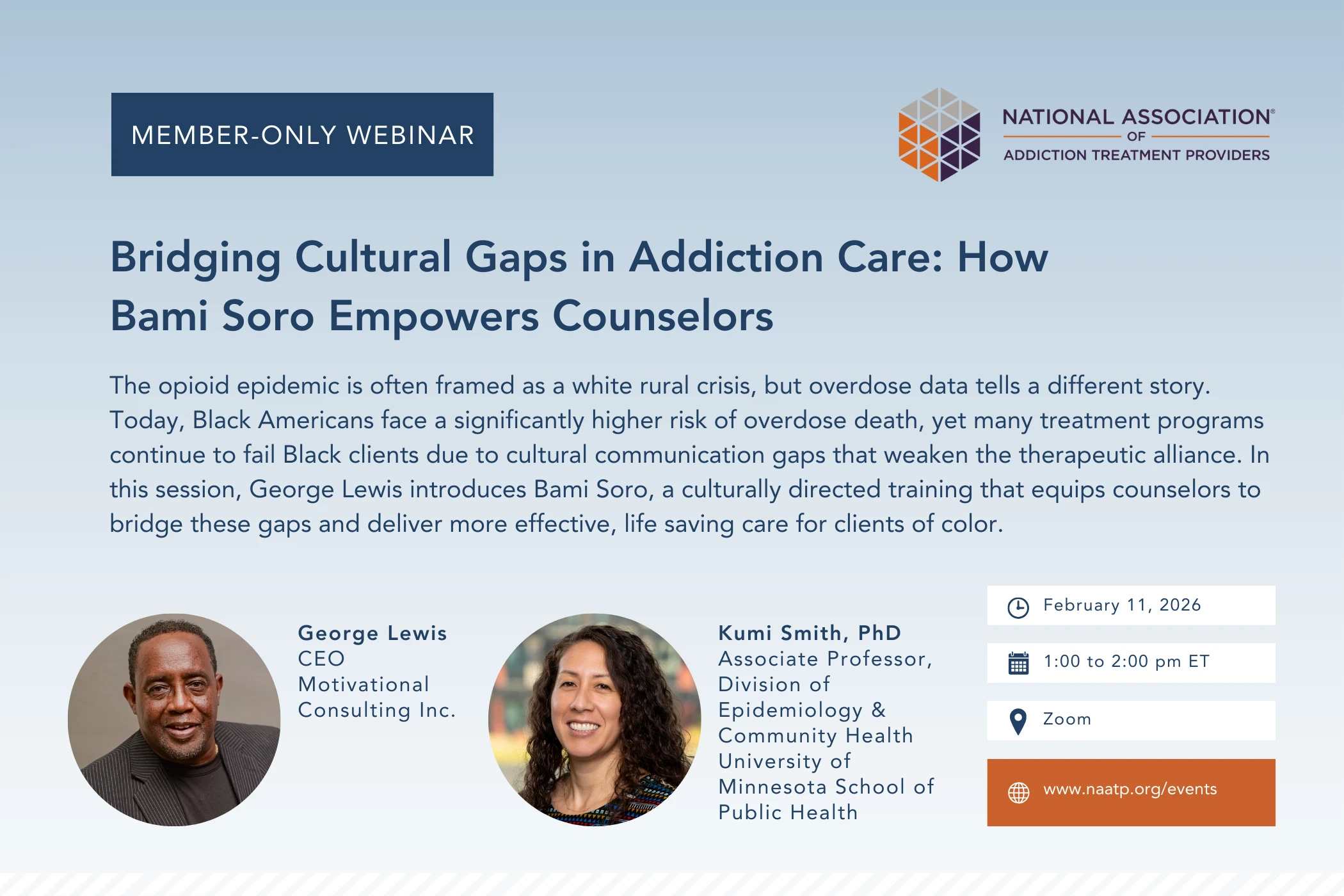
The opioid epidemic has historically been viewed as a "white problem" largely affecting rural America. But historic overdose data tells a far more complicated story about race and substance use in the US. One in which Black Americans today face far greater risk of overdose death than White counterparts. In this context, drug treatment programs can be lifesaving. Sadly, research shows that many programs consistently fail their Black clients, who are less likely to complete programs and more likely to relapse and die from overdose. Bami Soro is culturally directed training that is addressing this gap by empowering therapeutic professionals to work more effectively with clients of color. Creator of Bami Soro, Mr. George Lewis, will share his philosophy on how this program helps counselors bridge cultural communication gaps to achieve a stronger therapeutic alliance with minoritized clients.
Learning objectives
Explain how the "white problem" narrative of the US opioid epidemic is a myth.
Articulate ways in which cultural communication gaps impair the therapeutic alliance.
Cite features of the Bami Soro program that address the systemic shortcomings of the drug treatment world.
George Lewis has spent over 24 years in the human services field, delivering direct support to people from diverse backgrounds during some of the most challenging moments of their lives. Through this work, he discovered that genuine impact depends on communication that resonates with people’s lived experiences. This insight led him to develop an empathetic, culturally sensitive, bridge‑building communication style that has shaped his career as a motivational speaker, educator, lecturer, and group facilitator. Mr. Lewis is the creator of Bami Soro—“Talk to Me” in Yoruba—a storytelling‑based approach that helps professionals connect more authentically with Black Americans and people of color. As CEO of Motivational Consulting Inc., George is also the author of Bami Soro, producer of Addict Chronicles, and a Peer Recovery Coach.
Kumi Smith, PhD, is an Associate Professor in the Division of Epidemiology & Community Health at the University of Minnesota School of Public Health. Trained in epidemiology, public affairs, and history, she studies health disparities at the intersection of infectious diseases, substance use, and unstable housing. Her work focuses on developing structural interventions that help clinical providers deliver culturally specific, trauma‑informed care to marginalized communities.
Dr. Smith’s international research includes several years living and working in China, with a focus on HIV and STI epidemiology in resource‑limited settings. She also directs the HIV/STI Intervention and Prevention Studies (HIPS) program and is the 2025 recipient of the University of Minnesota’s Research and Creative Activities Award for community‑engaged scholarship.